



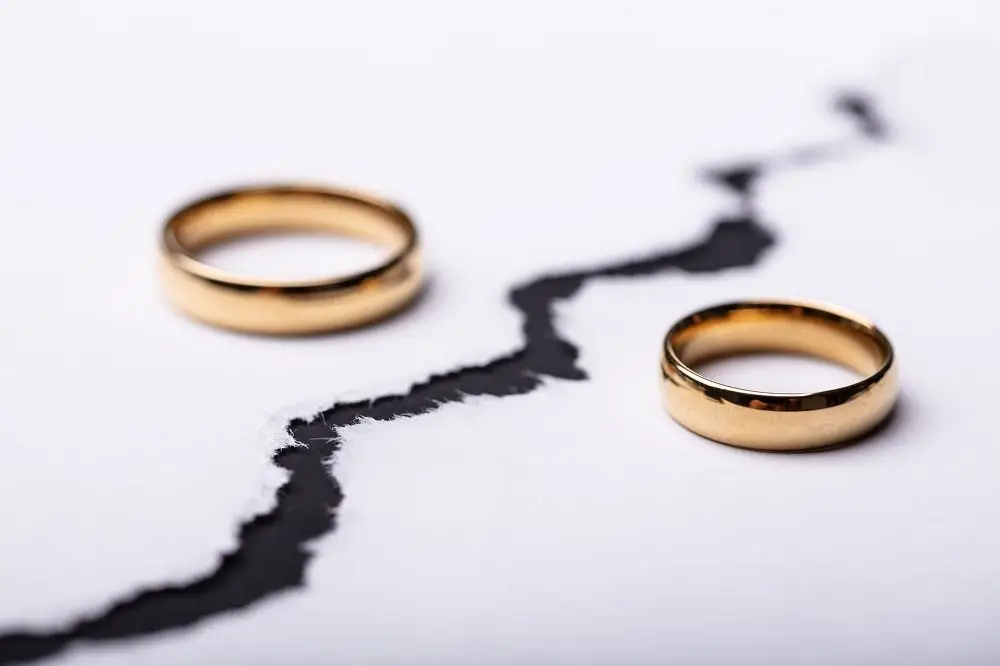
Some couples come to our office and tell us that one of the main reasons they want a divorce is because their spouse has been unfaithful. Some even ask if it’s possible—or appropriate in this case—to seek compensation for this or even take legal action, but… Is this possible?
Infidelity and Marriage

The first question that arises is whether the fact that one of the spouses has been unfaithful affects the divorce or separation proceedings.
The Divorce Act was passed in 1981 to provide a legal framework for divorce. One of the grounds for divorce provided for in this law is marital infidelity, and since then it has been recognized that an extramarital affair can be sufficient grounds for ending a marriage.
That changed in eIn 2005, when the grounds for divorce were eliminated, instances of infidelity ceased to be relevant in these proceedings.
However, it is not uncommon to encounter cases in which one of the parties mentions instances of infidelity in their complaint or answer—and even goes so far as to provide evidence of them, such as photographs, conversations, and even a report from private investigators.
The documents mentioned above serve only to stir up trouble and disrupt the proceedings, but from a procedural standpoint, they have no bearing on the decision to grant a divorce or separation.
Infidelity and Criminal Law
Under our laws, although adultery was punishable by severe penalties for many years—especially for women— it ceased to be a crime with the enactment of Law 22/78 of May 26, 1978, which repealed Articles 449 through 452 of the Penal Code and eliminated the last paragraph of Article 443.
Infidelity and Inheritance Law
When it comes to inheritances—another of the most frequently asked questions we receive—is whether infidelity can be grounds for disinheritance.
Failure to fulfill spousal duties is grounds for disinheritance; therefore, in principle, the “cuckolded” spouse could perfectly well disinherit the other spouse.
However, this situation rarely occurs in reality because it is so impractical, given that:
It is understood that if one spouse is unfaithful, the other will file for divorce, and once the divorce is granted, the other spouse loses their inheritance rights.
If you have been bequeathed a portion of the estate in a will, it is also understood that, as soon as the infidelity occurs, the first step will be to amend the will.
Infidelity and Ecclesiastical Annulment

The Code of Canon Law states that marriage is a matrimonial covenant by which a man and a woman form a lifelong partnership and are to remain faithful to and respect one another.
If one of the parties to the marriage excludes the duty of fidelity, the marriage is deemed invalid, and therefore null and void.
Now then, does this mean that if one spouse is unfaithful, the marriage automatically becomes null and void? The answer is NO.
This chapter is rarely cited in actions for annulment precisely because of the difficulty involved in proving it, given that:
- Infidelity is not presumed: this means that whoever alleges it must prove and substantiate it, and we all know how difficult that task is.
- Infidelity is not an automatic ground for annulment: this means that the fact that one of the spouses is unfaithful—even if it can be proven—does not, per se, that the marriage be annulled
- The intent to be unfaithful must exist at the time of marriage: This is where the main difficulty of this chapter lies, since it is not only necessary to demonstrate the existence of infidelity but also to prove that the unfaithful spouse intended to be unfaithful at the time of marriage—that is, that he or she married with the firm conviction that fidelity was out of the question in their marriage.
-
Is it possible for the person who has been cheated on to seek compensation?
I wanted to save this issue for last because, unfortunately, it’s the one clients ask about most often when inquiring about the legal consequences of infidelity.
To do this, we must consider two possible areas:
Agreeing on a settlement between spouses
Although this practice is not very common in our country, the fact is that prospective spouses can agree in a prenuptial agreement on compensation in the event that one of them is unfaithful during the marriage they are about to enter into.
It is also not uncommon for couples to agree that, if one of them is unfaithful, the other will be entitled to the family home or even to spousal support.
However, these agreements have a number of red lines that cannot be left to the discretion of the parties and primarily concern measures that affect third parties, especially minor children. Thus, an agreement under which the unfaithful spouse would lose custody of the children would be null and void.
To demand compensation
As a general rule, the occurrence of infidelity does not give rise to an obligation to pay compensation, since these are matters that pertain to the personal lives of the spouses.
However, the situation changes when such infidelity results in or causes harm to the other spouse that could give rise to a financial claim.
There are several grounds that may be legally supported by the foregoing, the most notable of which is concealing from the husband the fact that their child is not his.
In these cases, compensation is not being awarded for the infidelity itself, but rather for the financial damages caused by it.
Current article on civil law taken from: https://www.legaltoday.com/practica-juridica/derecho-civil/civil/que-consecuencias-juridicas-puede-tener-la-infidelidad-en-un-matrimonio-2022-04-13/