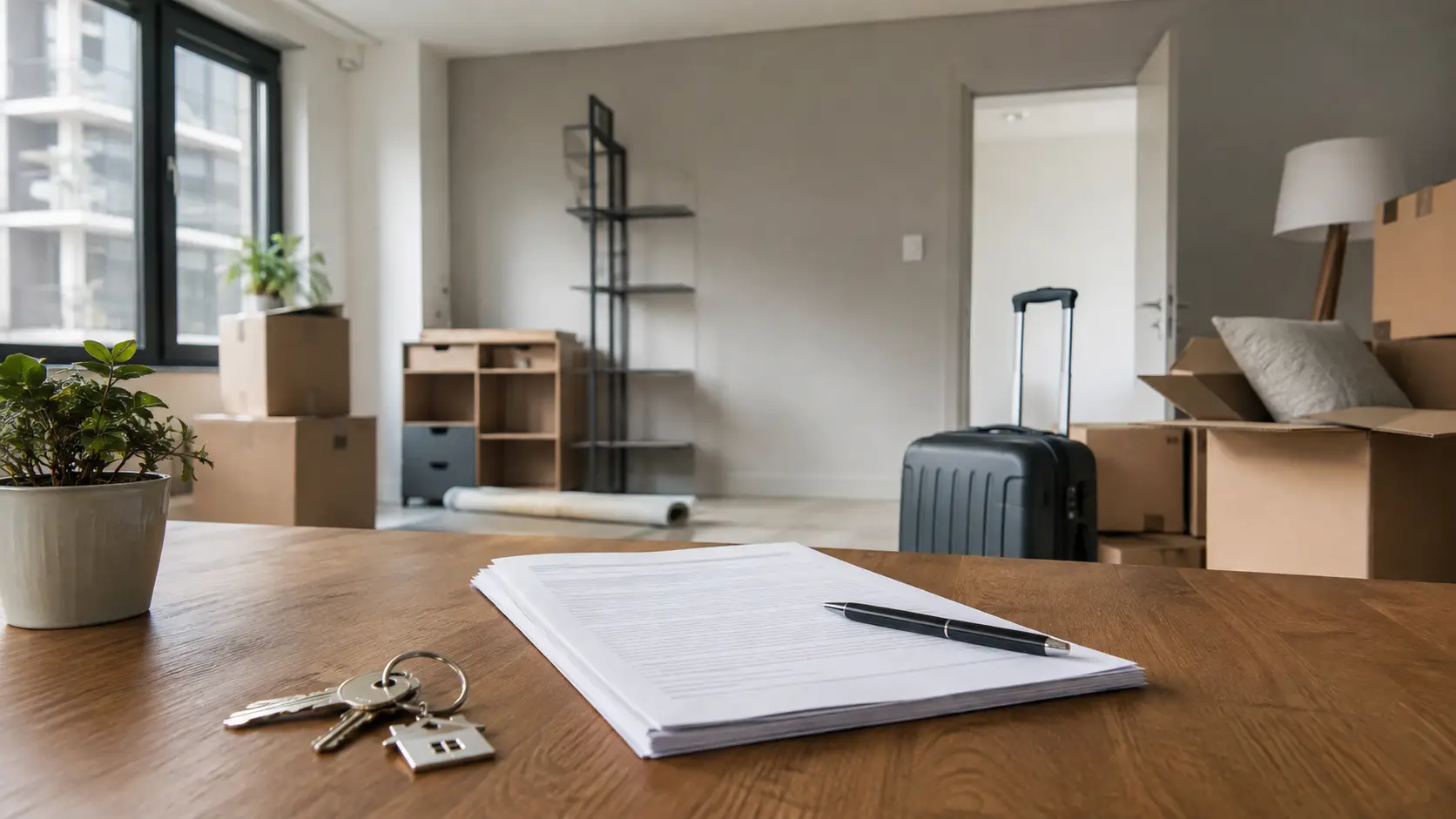




TERMINATION OF JOINT OWNERSHIP OF PROPERTY: LEGAL REGULATIONS AND ISSUES
Joint ownership of property in undivided shares—that is, without the allocation of a specific, individualized percentage—occurs in many cases when property is acquired through inheritance; either as a result of the acquisition of property during marriage or through voluntary acquisition by the interested parties.
HOW TO TERMINATE A JOINT OWNERSHIP OR CO-OWNERSHIP ARRANGEMENT
Joint ownership gives rise to a number of rights and obligations for the co-owners, but problems often arise regarding the use of those assets.
The law, as one would expect, provides for this possibility under the principle that no one may be compelled to remain in a situation of joint ownership, as set forth in Article 400 of the Civil Code.
This does not pose a problem in cases where the property can be divided; however, it does in cases where division is not possible—such as when the jointly owned property is real estate that cannot be physically divided to be distributed among the co-owners. Article 404 of the Civil Code provides that if the co-owners do not agree to award the property to one of them while compensating the others, it shall be sold and the proceeds distributed.
AMICABLE TERMINATION OF JOINT OWNERSHIP THROUGH A NOTARY
If the co-owners agree to terminate their co-ownership, they may either proceed with the sale to a third party through a notary, or one of them may acquire the entire property, upon payment of the agreed-upon purchase price—that is, by compensating the others.
The division of jointly owned property will be subject to an 1% tax on the portion that is sold or awarded, and this amount will serve as the price for all purposes—not only for tax purposes but also for other expenses.
TERMINATION OF JOINT OWNERSHIP ARISING FROM INHERITANCE
The distribution of property through inheritance is often another reason why property is acquired as joint ownership—whether due to a shortage of property to be distributed, because the will so provides, or because of the interests of the co-owners.
 The acceptance of an inheritance and its division may occur in cases where there are assets in the estate and the heirs cannot agree on the distribution, and is handled through a notary if the process is amicable; if not, the estate will be divided through judicial proceedings, which will involve the appointment of an estate accountant and an administrator, who will then proceed to allocate the assets.
TERMINATION OF JOINT OWNERSHIP THROUGH JUDICIAL PARTITION
If an amicable agreement cannot be reached, the only option is to pursue the oral trial procedure provided for in the Civil Procedure Act, in accordance with recent regulations; previously, these matters were heard in an ordinary trial.
We must bear in mind that the purpose of this legal proceeding is to obtain the judicial dissolution of the co-ownership, which, according to the law, is achieved through a judicial auction if the parties are unable to reach another solution, either beforehand or through legal proceedings.
Based on our extensive experience in these matters, we have generally been able to get one party to agree to the purchase and the other to agree to the sale between them, or to entrust the sale to a real estate agency after agreeing on a minimum price.
The first thing we advise our clients to do is to have a genuine market appraisal report prepared, and once that is done, to send a demand to the other party to agree to either the sale or the purchase of the property at the stated price.
If this is not possible, one must resort to legal action by filing an oral trial proceeding; previously, this was the “Ordinary” proceeding, but following recent legislative changes, the case will be heard under the rules governing oral trials, which will undoubtedly result in a shorter process—at least in name; though the actual situation in court remains to be seen.
As we have stated, this proceeding—which currently falls within the scope of oral proceedings—will be conducted in accordance with those procedures, and the complaint will be served on the defendant so that the defendant may file a written response and appoint an expert to appraise the real property when it is to be put up for auction, if the parties fail to reach an agreement, prompting the court to issue a judgment to that effect.
JUDICIAL AUCTION OF THE CO-OWNED PROPERTY
If, as a result of the judgment, the co-owners have not reached an agreement regarding the sale, the only option is a judicial auction, which any of the parties may request through enforcement of the judgment.
It goes without saying that the outcome of the auction will always be uncertain, but it is very important to note that the parties may participate in the auction without ultimately having to pay their share, but only the difference.
Needless to say, we believe this is the worst solution, but unfortunately, sometimes the parties’ positions are so at odds that there is no other option—which, as we have said, is the worst because the prices obtained will always be lower than in a private sale.
TIME LIMIT FOR BRINGING A LAWSUIT TO TERMINATE CO-OWNERSHIP
There is no time limit, as this legal action is not subject to a statute of limitations; therefore, legal proceedings for the judicial division of jointly owned property may be filed at any time.
FREQUENTLY ASKED QUESTIONS ABOUT THE TERMINATION OF CO-OWNERSHIP
Regarding the expenses associated with co-ownership
Expenses arising from joint ownership are the responsibility of the joint owners in proportion to their respective shares.
On this point, it should be noted that conflicts often arise among co-owners, frequently over which expenses are considered necessary—and therefore shared. Therefore, if the co-owners do not get along well, it is best to consider dissolving the co-ownership.
Other times, problems arise because everyone wants to enjoy the home, which would require agreements on shared use, but in our more than 40 years of professional practice, we have never seen this happen.
It is true that this can only be seen when one approaches it with this intention, but never otherwise.
Which Expenses Must Be Paid by the Person Occupying the Condominium Unit?
The person occupying the residence must pay the utility bills for the residence, but not the expenses associated with the property itself, such as those of the homeowners' association or taxes, unless the parties agree otherwise..
Can I claim compensation for use by one of the co-owners?
We understand that if the use and enjoyment of the property is detrimental to a co-owner who has been prevented from using the residence as well—and provided that the co-owner can prove this—the co-owner may request payment of compensation at the same time as requesting the division of the property.
If the action to terminate co-ownership affects encumbrances or real rights
The answer to this question is unequivocal and negative, since the decision to terminate joint ownership of the property can never affect any encumbrances on that property.
So, if you have a mortgage, it won't have any effect at all because it will remain in effect just like any other lien recorded in the Property Registry.
Needless to say, it would not affect any leasehold rights to the property that may be in effect.
If the action to terminate affects a right of use and enjoyment arising from divorce proceedings
It will never affect any right granted to one of the spouses by the court in cases of separation or divorce.
A spouse who has been granted the right to use the home—either because that right was awarded to him or her upon being granted custody of the children or because the home is designated as the marital residence—will continue to have the right to such use even if the joint ownership is terminated, and for as long as the court order remains in effect.
If one of the co-owners can sell their share
A co-owner may sell their share, provided that they first offer it to the other co-owners so that they may, if they so wish, exercise their right of first refusal and purchase it before a third party.
If none of the co-owners exercises that right, the share can, of course, be sold to a third party, and throughout the entire process, this would be treated as any other sale, and when we say “throughout the entire process,” we mean that the property transfer taxes would be payable by the buyer, who would also pay the notary fees, while any capital gains generated would be the seller’s responsibility.
What are the costs involved in terminating co-ownership if it is in favor of a co-owner?
With regard to expenses, these would be those typically associated with a transfer by public deed, with the notary fees to be borne by the purchaser, unless otherwise specified.
The most important thing is that you would not pay property transfer taxes—which are typically levied on a sale—but rather taxes on documented legal acts, at a rate of 0.5 or 1%, depending on the Autonomous Community.
As for the capital gains tax, it would be paid by the transferors, if applicable.
This law firm, with extensive experience in real estate and construction law in Alicante, is here to assist you with whatever you may need.
CARLOS BAÑO LAW FIRM
Law Firm by Carlos Baño Leon, specialists in real estate law.

«Carlos Baño Leon: TERMINATION OF JOINT OWNERSHIP OF PROPERTY: LEGAL REGULATIONS AND ISSUES»