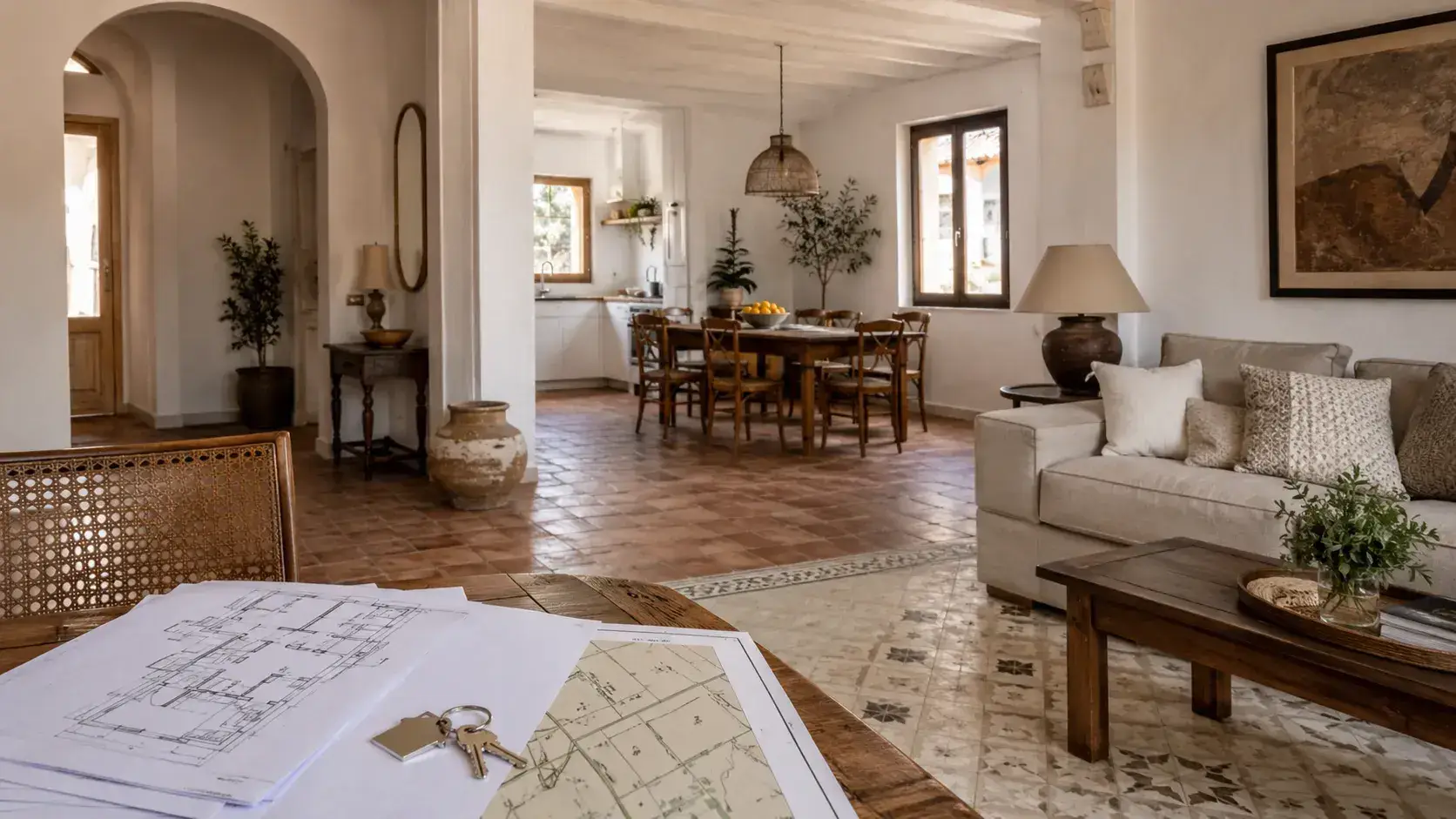




CONDOMINIUM OWNERSHIP
Welcome to the first article in our series dedicated to a fundamental topic: condominium ownership. In this series, we will explore in depth the various legal and practical aspects of condominium ownership, beginning with its context and development in Spain. Join us on this journey to better understand this crucial aspect of real estate law.
 CONDOMINIUM OWNERSHIP IN SPAIN
Condominium ownership is one of the legal regulations that most interests homeowners in Spain and is often the subject of questions on an almost daily basis.
For that reason, we thought it would be helpful to publish this brief article, which briefly addresses the key issues to provide an overview of this legal concept.
WHAT IS CONDOMINIUM OWNERSHIP?
This term refers to the co-ownership or undivided ownership of common elements that serve for the independent use and enjoyment of apartments and commercial spaces, whether in high-rise buildings, or single-family homes, provided that, in addition to their own structural elements, they share common elements that serve the enjoyment of the apartments and commercial spaces.
What is characteristic of this arrangement is that one enjoys both private property and common elements that are necessary for the construction of the building or for the use of shared facilities, in addition to the private property.
Horizontal Property has its basis and origin in the concept of the Community of Property, which is regulated by Article 392 of the Civil Code; of particular importance is the description—provided for illustrative purposes only—of the common elements covered by Article 396 of the aforementioned legal text.
As the specific legal regulation governing this matter, Law 49/60 of July 21 provides a fairly comprehensive framework for all aspects of this legal concept of paramount importance.
COMMON ELEMENTS IN CONDOMINIUMS IN SPAIN
A trend in modern construction at the time was the building of homes that formed part of high-rise buildings.
These buildings consist of a variety of structural and architectural elements that are essential to their construction. These elements include the floor, overhang, foundations, and roof, which form the physical foundation of the building. They also include elements such as columns, beams, floor slabs, and load-bearing walls, which provide stability and structural support.
Facades are another integral part of these buildings, encompassing the exterior cladding of terraces, balconies, and windows, along with the enclosing elements that make them up and their exterior finishes. The entrance, staircases, gatehouses, hallways, passageways, walls, moats, courtyards, and wells are common areas that facilitate movement and access within the building.
In addition, this includes spaces designated for elevators, storage areas, meters, telephone equipment, and other common services or facilities, including those for private use. This includes installations and piping for the supply of water, gas, or electricity, as well as systems for solar energy, domestic hot water, heating, air conditioning, ventilation, and smoke exhaust.
Fire detection and prevention systems, intercom systems, building security systems, communal antennas, and other systems for audiovisual or telecommunications services are also considered.
In summary, condominium management encompasses a wide range of physical components and systems that contribute to the operation and comfort of residential and commercial buildings.
These structural elements do not belong to any particular co-owner but rather to the community as a whole, since their purpose is to enable the independent use and enjoyment of the apartments and commercial spaces, and that is why they have nothing to do with the apartments or private elements that are individually owned for the use and enjoyment of their respective owners.
Therefore, the Condominium Act regulates the operation of the community formed by these common elements, which are thus jointly owned by the owners.
Since the common areas belong to the community—and therefore to all the co-owners—they are not subject to the discretion of individual owners, and only the community may make decisions regarding them through votes that vary depending on the specific matter at hand.
We have already seen that these are considered common elements under the law, but this list is not exhaustive; therefore, any common element not described herein may be understood to include any other element that is not listed as exclusive.
There are many legal issues that arise regarding whether or not it is a common element, but this goes beyond the scope of this article.
RESTRICTIONS ON THE USE OF SUCH PROPERTY UNLESS THERE IS UNANIMOUS AGREEMENT AMONG CO-OWNERS IN SPAIN
Just as with the contribution ratios for common expenses, the status of a common element—as opposed to private elements—may only be modified by a unanimous decision of the Owners’ Association, which may designate as private any property that was originally a common element.
Outside of that unanimous agreement, it is not permissible to alter or interpret a common element differently.
CONSTITUTION — DEED DECLARING NEW CONSTRUCTION IN SPAIN
The title establishing the condominium is the deed of Declaration of New Construction, which the owner of the building files with the Property Registry to register the building and all its components before proceeding with the sale of the apartments and commercial spaces.
From that point on, the Land Registry will recognize it as a registered property, and then each of the individual units, as they are sold, will be registered as separate properties.
In the deed of incorporation, each unit must have its own contribution ratio for community expenses; furthermore, the Owners’ Association shall be deemed established and incorporated by virtue of said deed, and mandatory bylaws may be established.
The deed of declaration of new construction typically sets forth the common elements in detail; therefore, the deed is an essential reference to be taken into account throughout the life of the homeowners’ association.
BYLAWS
The Declaration of New Construction, which serves as the title deed for the homeowners’ association, typically includes a set of private bylaws of great importance. The primary purpose of these bylaws is to facilitate harmonious coexistence among the co-owners from the very beginning.
It is essential to keep in mind that this private agreement cannot be enforceable against third parties unless it is duly registered with the Land Registry.
Therefore, its regulation in the Deed of Declaration of New Construction is crucial, since this deed contains the fundamental provisions governing the establishment and exercise of rights, as well as various provisions related to the use, purpose, management, and maintenance of the building, among other aspects.
Thus, the Declaration of New Construction covers a wide range of regulations that promote harmonious coexistence and efficient governance within the homeowners’ association, ensuring the protection of the interests of all parties involved and the proper management of the property in question.
CONTRIBUTIONS TO COMMON EXPENSES IN SPAIN
The contribution toward the maintenance of common areas is determined by the so-called participation coefficient, which is set by the developer in the Deed of Declaration of New Construction when the building is constructed; this coefficient is calculated based on, among other factors, the square meters of a unit or commercial space relative to the total square meters of the building.
Thus, when purchasing a property, the description in the deed for that property includes the buyer’s share of the community fees and expenses for the maintenance and upkeep of the community.
When we refer to expenses, we are talking about both ordinary and extraordinary expenses.
That percentage cannot be changed unless all co-owners unanimously agree to do so at a meeting of the Owners' Association.

Carlos Baño Law Firm
On our Law Firm We are experts in real estate law, so please don't hesitate to contact us if you need our help.
«Carlos Baño Leon Law Firm: Experts in Real Estate Law»