


Determine Who is responsible for paying for repairs in a rental property? It is one of the most common issues between tenants and landlords. The key is to understand what the law means by “maintenance of the property” and what the minor repairs and how to address cases of wear and tear, force majeure, or misuse.
If you're thinking about renting a property or have already done so, you may have wondered who is responsible for each expense, what the law says, and how to effectively prove the cause of damage. Below, we address the most common questions based on the Urban Lease Law (LAU) and the Civil Code, and we've added practical guidelines to avoid conflicts.
Types of Home Repairs Under the Law
Repairs to a Rental Property: Obligations and Costs
The Article 21 of the LAU distinguishes between different categories of repairs and assigns their costs, while the Article 1554.2 of the Civil Code reinforces the landlord's obligation to keep the dwelling in livable condition throughout the term of the lease.
As a general rule, preservation and livability correspond to the owner, and the minor repairs by wear and tear usual to the tenant. The most common scenarios are interpreted on that basis.
Maintenance and Livability (the landlord's responsibility)
The owner must maintain the home in living conditions without this resulting in a rent increase. This includes damage to the structure or exterior walls caused by the passage of time, malfunctions of essential systems not attributable to normal use, damage due to force majeure, and construction work mandated by the government.
The practical implication is clear: anything that affects the suitability for living and is not the tenant's fault, it is considered part of the landlord's maintenance responsibilities.
Minor repairs due to wear and tear (to be paid by the tenant)
The LAU assigns to the tenant the minor repairs resulting from normal use: light bulbs, aerators and gaskets, minor adjustments to faucets, handles, hinges, blinds, or aged silicone seals.
The courts consider moderate amount, frequency and in relation to daily use. If the damage is significant, infrequent, or affects essential systems, it is typically the owner's responsibility to repair it.
Furniture and appliances included
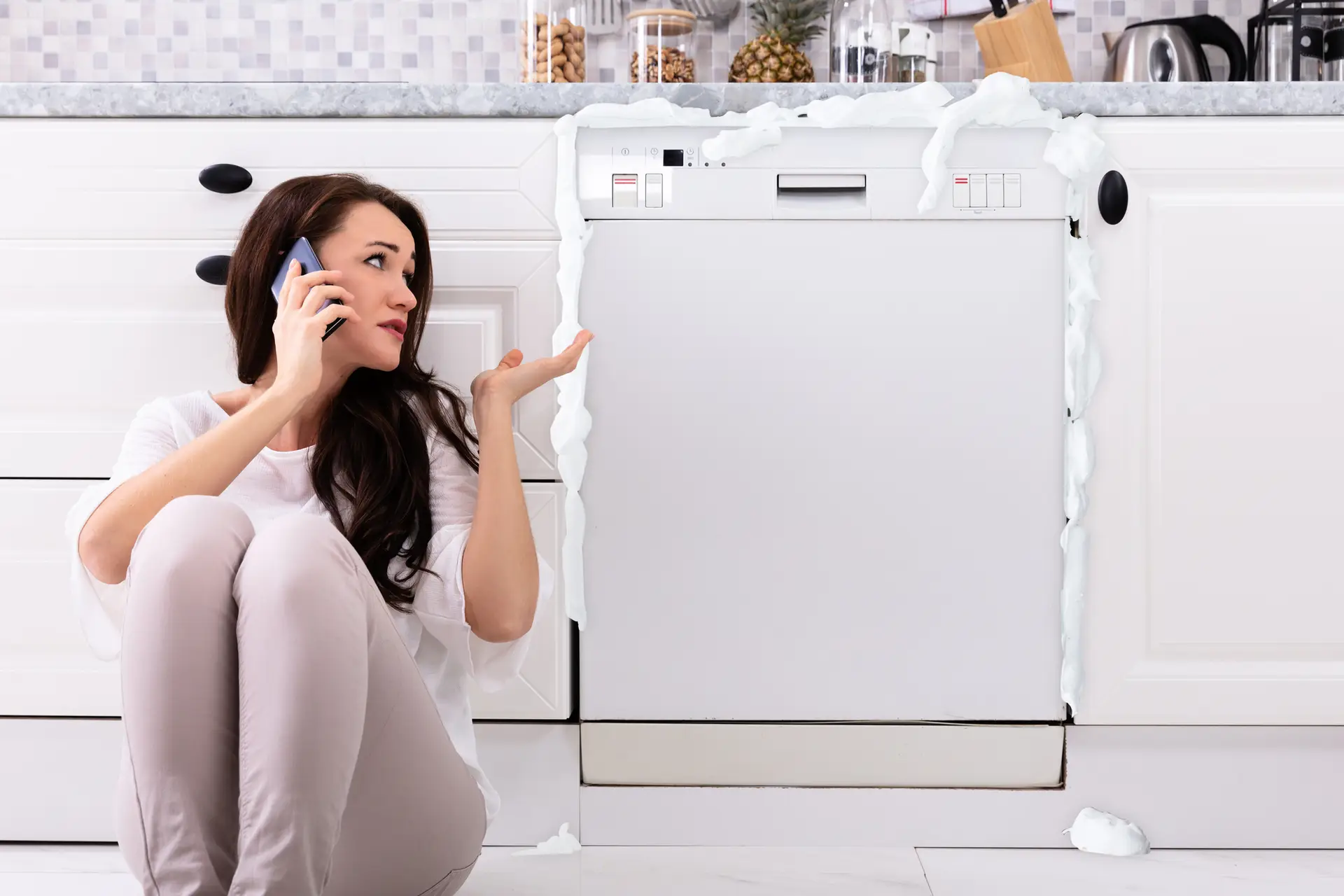
In a furnished rental, the landlord retains the functionality furniture and appliances, except for misuse the tenant's. If the refrigerator breaks down due to the end of its useful life, the landlord pays; if it breaks due to impact or improper use, the tenant pays.
If the tenant test If the damage is not attributable to the tenant’s conduct, the landlord is responsible for the costs under the Civil Code. Hence the importance of documenting the condition of the property at the time of handover and its normal use.

How to Document and Avoid Conflicts in Rental Repairs
Effective prevention reduces disputes and speeds up resolutions. It is advisable to agree on procedures, document them in writing, and rely on technical criteria when necessary.
Furthermore, setting expectations from the outset facilitates a smooth contractual relationship and prevents minor incidents from escalating into unnecessary legal disputes.
Inventory, handover report, and traceability
Includes Inventory with photos/video the initial status and serial numbers of household appliances. It establishes alert channels (email/app) and keeps quotes, invoices, and replaced parts on file when proof of origin is provided.
The traceability It allows the judge (if necessary) to objectively assess the cause of the damage and determine who should bear the cost.
Deadlines and Urgent Requests
The landlord is liable for reasonable time frame, especially in emergencies (leaks, complete loss of service, boiler out of order). The tenant must provide access and do not aggravate the damage (turn off the valves, disconnect, ventilate).
If there is a risk of further damage, a minimal repair and then submit a claim for the amount, along with the invoices and the technical report.
Useful Provisions (and Legal Limits)
You can agree on response times, periodic boiler/AC maintenance, or a general list of minor repairs to be paid for by the tenant. What you cannot do is empty the owner's legal obligation to maintain the property's habitability.
It is also advisable to limit modifications made by the tenant (extensive drilling, painting, changing locks) and their restitution when finished.
Common Case Studies and Their Legal Context
Certain scenarios recur in practice and help define responsibilities quickly and with legal certainty.
Applying the criteria of the LAU and the Civil Code to each case prevents fruitless arguments and speeds up the resolution of disputes.
Boiler or water heater out of service
If the problem is internal and there was no misuse, the landlord (This applies to hot water and heating, which are essential.) Annual maintenance may be agreed upon at the tenant's expense, but this does not cover failures due to the end of the useful life of the equipment.
In the event of prolonged outages, document the incident and all communications; a proportional reduction rental income if the home becomes temporarily uninhabitable.
Clogs and Plumbing
Occasional clogs in siphons due to normal use: tenant. Collapses due to structural defects, roots in downspouts, or main manholes: landlord.
A plumber's report, complete with photos and a diagnosis, is often decisive in determining the cause of the problem and who is liable for payment.
Appliances included
Washing machine/refrigerator: normal wear and tear, landlord; breakage due to misuse, tenant. Very old devices may need to be replaced due to obsolescence, at the owner's expense.
Keep manuals on file and record inspections to document proper maintenance.
Paint, blinds, and locks
Paint wear and tear after long-term contracts: typically landlord. Blind cords/slats, based on typical use: tenant. Faulty installation or poor workmanship: landlord.
Lock cylinder replacement due to the tenant losing their keys: at the tenant’s expense; for security reasons following a reported burglary: to be determined by mutual agreement between the parties.
What to Do If the Other Party Doesn't Comply
If no agreement is reached, proceed systematically: issue a formal notice, conduct a technical inspection, and, as a last resort, take the appropriate legal action.
An orderly and well-documented process usually prevents litigation and facilitates a quick resolution.
If the landlord does not make repairs
- Binding Requirement with a timeframe and description of the risk.
- Minimal intervention to prevent further damage (while ensuring invoices (and the technical report).
- Rate claim for payment, termination of the contract, or, where applicable, a proportional reduction in rent.
If the tenant does not pay their share
- Communicate and demand repair or replacement within a specified time frame, providing proof of origin.
- Set off against a security deposit upon termination or when claiming damages.
- In serious or repeated cases, consider the resolution of the contract.
Frequently Asked Questions About Rental Repairs
Can a landlord raise the rent due to maintenance work?
No. The works of conservation and habitability do not justify a rent increase: they are the landlord's legal obligation.
If the cause of the damage isn't proven, who pays?
In the absence of evidence of misuse, the criterion of conservation to be paid by the landlord. Hence the importance of the inventory and technical reports.
Can limits be agreed upon for minor repairs?
Yes, as long as the agreement is reasonable and does not undermine the legal obligation to keep the home habitable.
The Opinion of Carlos Baño Abogados
At Carlos Baño Abogados, we recommend preventing conflicts in rental repairs with a clear contract, a detailed photographic inventory, and defined communication channels. If a problem arises, it’s best to act quickly, document everything (notices, estimates, technical reports), and seek a reasonable solution. If the disagreement persists, it is best to request technical criteria and legal advice before the problem escalates.
Our team of Real Estate Lawyers in Alicante You can review your contract, correctly allocate expenses and process, if applicable, the claim appropriate remedies (repairs, rent reduction, termination, damages), thereby avoiding delays and unnecessary costs.
You can visit us at our office or Find us on Google Maps.